- 1Shoulder
- 2Chest or bust
- 3Natural waist
- 4Fullest hip
- 5Bicep
- 6Sleeve
Numbered paths are placement cues. Use the written garment-specific steps for exact landmarks, posture, tension, source, and verification.
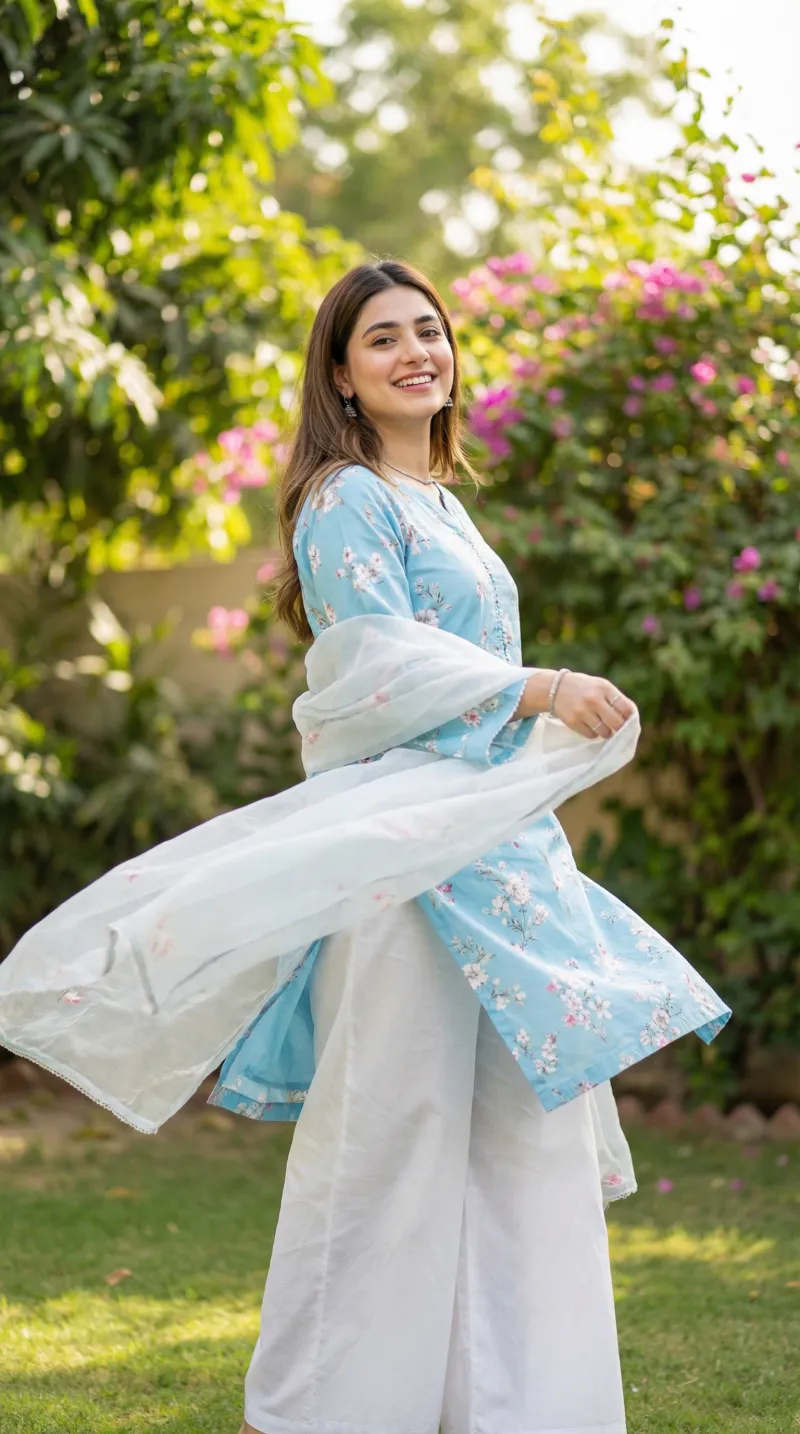
The short answer
Shalwar kameez measurements are a coordinated set: the kameez needs upper-body, length, hem, and slit decisions, while the shalwar needs waist placement, seat, rise, length, and ankle treatment. Record the two garments as one outfit brief.
How to Measure for Shalwar Kameez: step by step
01. Choose the silhouette
State whether the kameez is straight, A-line, loose, or shaped and whether the lower garment is a classic shalwar, trouser, cigarette pant, or another cut.
02. Shoulder and upper body
Measure shoulder width, chest or bust, natural waist, and fullest hip with the tape level. Do not force posture or pull the tape tight.
03. Neck and front opening
Record the neck circumference only when the design requires it, plus the intended front and back neckline depth as garment design values.
04. Sleeve and arm
Measure shoulder point to sleeve end, fullest bicep, elbow, and wrist when the sleeve is fitted. Note sleeve style and opening.
05. Kameez length and hem
Measure from high shoulder point to the planned hem. Record hem width and side-slit height separately because they control movement and visual proportion.
06. Shalwar waist and seat
Record where the shalwar will sit, then waist and fullest seat. State whether the waistband is elastic, drawstring, fixed, or partially elastic.
07. Rise, length, and ankle
Measure crotch depth or rise only with guidance, then outseam and ankle opening. The lower-garment cut determines how those values are used.
08. Dupatta and footwear context
Note the planned footwear height and dupatta style because both can change hem decisions and how the full outfit is balanced.
Record the context
Write down the garment, desired fit, unit, date, measurer, capture method, and whether each number came from the body or an existing garment. Keep body measurements separate from finished-garment specifications and ease.
Common mistakes
- Combining body and garment values in one column
- Leaving the lower-garment cut unspecified
- Using neckline depth as a body measurement
- Ignoring footwear when choosing kameez and trouser length
Verification checks
- Compare related circumferences, lengths, height, and usual size for obvious conflicts.
- Repeat high-risk values and photograph the tape position when a landmark can be interpreted two ways.
- Review posture, asymmetry, footwear, support garments, and any expected body change before pattern release.
Printable shalwar kameez checklist
| Field | Value | Source / note |
|---|---|---|
| Shoulder | ____ in / cm | Body / garment / photo |
| Chest or bust | ____ in / cm | Body / garment / photo |
| Natural waist | ____ in / cm | Body / garment / photo |
| Fullest hip | ____ in / cm | Body / garment / photo |
| Bicep | ____ in / cm | Body / garment / photo |
| Sleeve | ____ in / cm | Body / garment / photo |
| Kameez length | ____ in / cm | Body / garment / photo |
| Hem width | ____ in / cm | Body / garment / photo |
| Side-slit height | ____ in / cm | Body / garment / photo |
| Shalwar waist | ____ in / cm | Body / garment / photo |
| Seat | ____ in / cm | Body / garment / photo |
| Outseam | ____ in / cm | Body / garment / photo |
Before production
A maker must still convert this body evidence into a garment specification. Naap’s review resolves flagged values, desired ease, construction choices, and the fit remedy before production.
Reviewed July 15, 2026 by Naap Editorial. Read the measurement provenance method.